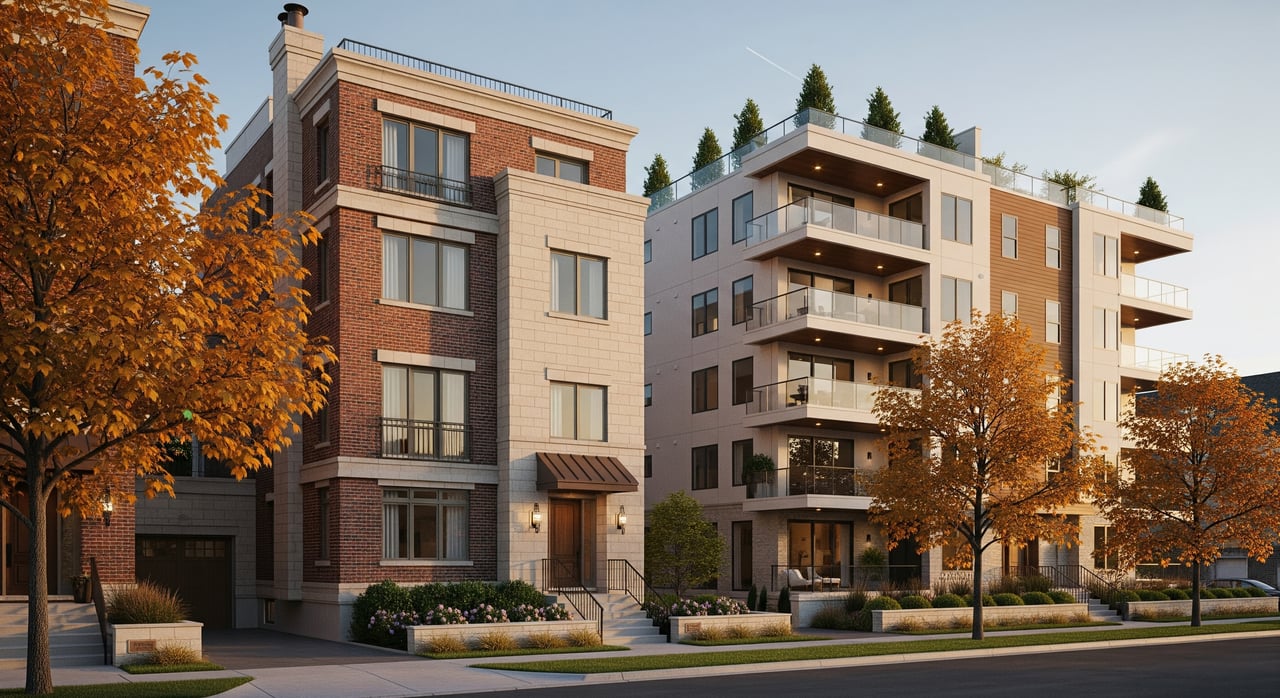
Townhome vs Condo in Maple Grove: Which Option Fits?
Condo or townhome in Maple Grove? If you are a first-time buyer, the differences can feel confusing and the stakes feel high. You want low maintenance, predictable costs and a smart long-term choice near the places you love. In this guide, you will learn how ownership, HOA rules, monthly costs, financing and resale play out in Maple Grove, plus a simple framework to make a confident decision. Let’s dive in.
In Maple Grove, you will find both condominiums and townhomes near Arbor Lakes, Elm Creek Park Reserve and key commute routes like Highway 169 and Highway 610. A condo is a form of ownership where you own your unit’s interior and share ownership of common elements like the roof and grounds. A townhome is a building style with attached, multi-level homes that can be set up as condos or as fee-simple lots with an HOA.
That legal setup matters. In a condo, the association usually handles most exterior elements. In a fee-simple townhome community, you may own the land under your unit and be responsible for parts of the exterior. The only way to know for sure is to confirm the legal form for each listing.
With most condos, you own the interior space and a share of the common elements. Associations usually manage the roof, exterior siding, grounds, and common utilities or amenities. You typically focus your maintenance on interior items like finishes, fixtures and appliances. This setup can be appealing if you want minimal exterior work and predictable coverage on big-ticket items handled by the association.
Townhomes in Maple Grove can be structured like condos or as fee-simple homes within an HOA. If the townhome is fee-simple, you may own the exterior walls and the land under your unit. In that case, you could be responsible for more exterior upkeep, and the HOA may handle only shared areas and limited services. Never assume a townhome is fee-simple or that a condo-style townhome has the same responsibilities as a traditional condo. Always verify.
Your experience is driven by the association’s documents. Key items to request include the Declaration or CC&Rs, bylaws and rules, the current budget and financial statements, any reserve study, the last 12 to 24 months of meeting minutes and the master insurance policy declarations. These show who pays for what, how the community is managed and what projects are coming.
Healthy reserves and a recent reserve study reduce the risk of surprise costs later. Underfunded reserves are a common reason for special assessments. Review whether reserve contributions match the community’s long-term repair plan for roofs, siding and parking surfaces. Meeting minutes can reveal planned capital projects or recent assessments.
Associations carry master insurance, but coverage varies. Confirm whether the master policy is “bare walls-in,” “walls-in,” or “all-in,” and whether interior finishes are covered. Ask about the master policy deductible and how it is allocated after a claim. You will likely carry an HO-6 policy for a condo, which is often less expensive because the master policy covers the exterior. A fee-simple townhome may require an HO-3 policy that insures both your interior and exterior.
Request documents from the seller or listing agent and confirm details with the association or the management company. In Minnesota, sellers must disclose association documents when known. Read everything before you waive any contingencies.
Your monthly cost is more than the mortgage. It also includes property taxes, insurance, HOA dues, utilities and any maintenance not covered by the HOA. Condos often have higher dues because the association covers more services, which can make your personal insurance and exterior maintenance costs lower. Fee-simple townhomes can have lower dues, but you may carry higher insurance and more exterior expenses.
Below are illustrative examples to show how costs can shift by property type. These are not quotes; always verify actual numbers for the property you choose.
Example A: 1-bedroom condo at an illustrative $250,000
Example B: 2-bedroom fee-simple townhome at an illustrative $325,000
How to get accurate numbers for a specific Maple Grove property:
Some loans, including certain FHA and VA options, review condos at the project level. Lenders may evaluate owner-occupancy ratios, rental concentration, delinquency rates, litigation and reserve funding. If a condo project is not approved, your down payment or rate options could change. Fee-simple townhomes usually face fewer project-level hurdles.
Proximity to Arbor Lakes, Elm Creek Park Reserve and major commute routes is a plus for many buyers. A well-managed association with healthy reserves and clear rules supports value. Neutral, well-maintained finishes and a layout that fits how people live can help you sell faster if you decide to move.
Define priorities. Do you want the lowest exterior maintenance, or more control and space? How important are monthly payment and commute time? Will you want to rent the property later?
Confirm the legal form. Identify whether the property is a condo or fee-simple townhome using the MLS and Hennepin County record.
Review HOA documents. Read the CC&Rs, bylaws, budget, reserve study, insurance declarations and meeting minutes. Look for reserve strength, upcoming projects and rental rules.
Build your true monthly number. Add mortgage, property taxes, HOA dues, insurance, utilities and expected maintenance not covered by the HOA.
Verify financing early. Ask your lender about condo project approval and any occupancy or reserve requirements for your loan type.
Inspect thoroughly. For townhomes, confirm exactly where exterior responsibility begins and ends. For condos, pay attention to limited common elements and interior systems.
Think resale. Consider location near parks, shopping and commuter routes, and compare days on market for similar Maple Grove condos and townhomes.
Scenario 1: Tight monthly budget, wants low maintenance. A condo with comprehensive HOA services may fit. Confirm dues include exterior care and that reserves are healthy.
Scenario 2: Wants more control and a small yard or patio. A fee-simple townhome could fit, with more responsibility for exterior items balanced by potentially lower dues.
Scenario 3: Planning to rent later. Review rental restrictions and investor concentration. Confirm financing implications and demand for that property type.
Choose a townhome if you want a multi-level layout and potentially more private outdoor space, and you do not mind handling more exterior responsibility if it is fee-simple. This can work well if you value control over your exterior finishes and are comfortable budgeting for items a condo association might otherwise cover. You may find lower monthly dues but higher individual insurance and maintenance costs.
Choose a condo if your top priority is low exterior maintenance and predictable coverage of major building components through the association. This can be a good match if you prefer to focus on interior upkeep and want services like snow removal and exterior insurance built into one monthly fee. Review the association’s reserves and rules so you understand the long-term plan and any restrictions.
You do not need to sort this out alone. A local, high-activity agent can help you verify the legal form, review HOA paperwork and build a clear monthly budget so you can buy with confidence. If you are weighing condos and townhomes in Maple Grove near Arbor Lakes or Elm Creek Park Reserve, reach out to schedule a consultation with Blake Halverson Real Estate. We will help you compare specific properties side by side and make a confident choice.

Whether you are buying, selling or investing in real estate, Blake has a proven track record to be the versatile agent you need. Through strong, aggressive representation, Blake will help you achieve your desired outcomes.
7700 FRANCE AVE S STE 230 EDINA MN 55435