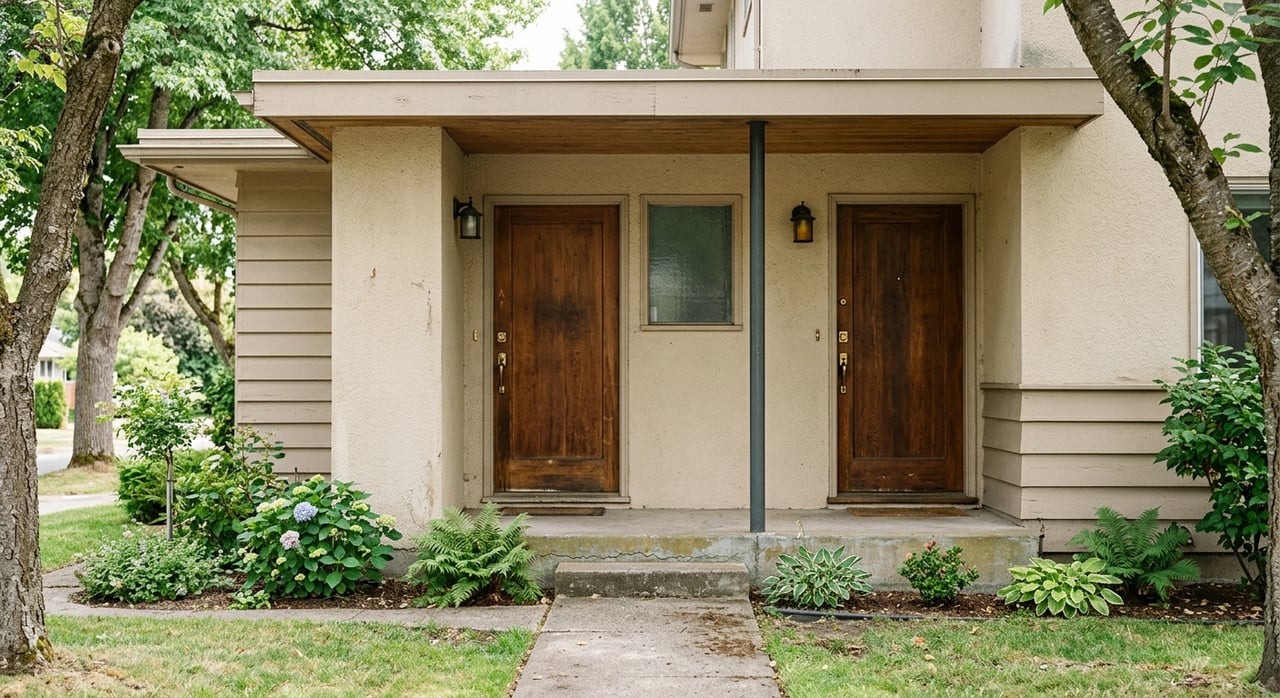
Guide to Buying a Duplex in Minneapolis to Live In
Looking for a way to buy in Minneapolis while offsetting your monthly housing cost? A duplex can be one of the most practical paths, especially if you plan to live in one unit and rent the other. The idea sounds simple, but in Minneapolis, the smart version of this strategy depends on local rules, property condition, and careful budgeting. Here’s what you should know before you buy, so you can move forward with more clarity and fewer surprises.
A live-in-owner duplex gives you a chance to own your home while using the second unit as a rental. For many buyers, that can make a higher purchase price feel more manageable over time.
In Minneapolis, duplexes are not a rare property type. City parcel data shows that 11.1% of housing units are in duplex or triplex buildings, and small-building rentals make up 30% of rental units and 85% of rental buildings. That means you are not chasing a fringe opportunity. You are shopping within a well-established part of the local housing stock.
This also matters when you think about long-term resale and demand. A property type that already fits the city’s housing mix tends to be easier to understand, evaluate, and compare than something highly unusual.
If you want more options, it helps to focus your search where small-building rentals are relatively common. Based on the city’s rental-stock analysis, duplex hunting may be more productive in Camden, Northeast, Near North, Nokomis, Powderhorn, and Longfellow.
That does not mean you cannot find a good fit elsewhere. It does mean these areas are a logical starting point if your goal is to see more duplex inventory and compare more examples.
Some parts of Minneapolis lean more heavily toward larger apartment buildings. The city’s research suggests Central and University skew more toward larger-building stock, which can change what you find if your goal is a traditional two-unit property.
One of the biggest realities of duplex shopping in Minneapolis is age. The city’s rental-stock research found that duplex and triplex rental buildings average 101.8 years old.
That does not make older duplexes a bad buy. It does mean you should expect careful due diligence around major systems, deferred maintenance, and reserve planning.
The same research found older rental stock in areas such as Phillips, Powderhorn, Northeast, Calhoun-Isles, and Near North. If you are shopping in older pockets of the city, inspection quality matters just as much as price.
Before you get too far into the emotional side of a property, check the parcel. Minneapolis uses a land-use framework where each property has a primary zoning district and a built-form overlay district, and some parcels also have additional overlay rules.
The city’s missing-middle housing guidance includes duplexes, triplexes, fourplexes, and accessory dwelling units. Still, the rules are parcel-specific, so you do not want to make assumptions based on the block or the building next door.
A smart first step is to review the city’s property information search for each duplex you consider. That tool can help you check:
This step can save you from finding out too late that a property has issues that affect your plans.
For duplexes in Minneapolis, a Truth in Sale of Housing evaluation is required before the sale. The city says buyers need the full report before the property can be shown.
That makes this document one of the first things you should request and review closely. It can give you an early look at required repairs, safety issues, or deferred maintenance that may affect your offer, your financing, or your move-in timeline.
In practice, this is one of the most important local checkpoints in the whole process. It helps you separate a promising duplex from a property that may need more cash and work than you want to take on.
If you plan to live in one unit, owner-occupant financing options may open doors that are different from a pure investment purchase. Minnesota Housing’s homeownership programs are owner-occupancy based and note homebuyer education requirements, along with downpayment and closing-cost loans up to $18,000.
For duplex purchases, Minnesota Housing’s HFA Advantage product guide adds a 3% minimum borrower contribution. It also requires at least one borrower to complete approved landlord education before closing.
That landlord education requirement is worth paying attention to early. If you are serious about house hacking with a duplex, build that step into your timeline instead of treating it like a last-minute task.
For many live-in duplex buyers, homestead classification is a major part of the math. In Minnesota, homestead classification requires that you occupy the home as your sole or primary residence and that you are a Minnesota resident.
Hennepin County says homeowners must own, occupy, and apply by December 31. New owners must apply within 30 days of transfer.
For duplexes and triplexes, Minnesota’s property tax manual says that if one unit is used for homestead purposes, the entire property is classified as homestead class 1a. Homestead status can also qualify the property for a market value exclusion.
That can make a meaningful difference in your carrying costs, but only if you apply correctly and on time. This is one of those details that should be part of your post-closing checklist from day one.
A duplex can help offset expenses, but it is still important to budget with discipline. In Minneapolis, property taxes can shift when market value or classification changes, and the city notes that market value depends on factors such as location, size, age, condition, renovations, and comparable sales.
Minneapolis assessors value property as of January 2. That means the tax picture you see today may not be the exact picture you carry after closing, especially if the property’s value or use changes.
When you run the numbers, include more than principal and interest. Your real budget should account for:
A duplex can be a smart move, but only if the monthly plan still works when real operating costs show up.
If you plan to rent the second unit, Minneapolis requires a rental license. The city states that every rental property must have a license.
This applies even in situations where the owner does not occupy that unit, even if no rent is paid or the occupant is a relative. Rental licenses expire March 1 each year, so this is an ongoing part of ownership, not a one-time item.
The city also notes that most new rental licenses require either a change-of-ownership fee or a conversion fee. In addition, all duplexes, triplexes, and fourplexes need a change-of-ownership inspection fee.
If a unit becomes a rental, a conversion inspection is also required. New rental licenses generally must be applied for within 60 days of closing, or an administrative fee applies.
Some buyers look at the second unit and immediately think about short-term rental income. In Minneapolis, short-term rentals have different requirements and their own application type.
That means you should not assume a duplex can simply be used for short-term stays without separate compliance work. If that use matters to your strategy, verify the rules for that specific plan before you write an offer.
A good duplex is not just about purchase price. It is about how the property works as a home, a rental, and a long-term asset.
When comparing properties, focus on four local checks first:
Then layer in the physical condition of the building, especially if it is older. Roof, mechanicals, windows, foundation, electrical, and plumbing can all change the real cost of ownership.
For pricing context, Minneapolis offers a residential median estimated market value dashboard that can be filtered by property type, ward, community, neighborhood, and year. The city also notes that values vary by neighborhood, size, style, and market conditions.
The city’s property information search and neighborhood sales finder are also useful starting points because they show public-record details like sales history, classification, and license history. Looking at all of that together can help you make a more grounded decision.
The best live-in duplex purchases usually share a few traits. The buyer understands the property as both a home and a small rental business. The numbers include realistic costs, not optimistic guesses. And the due diligence is local, detailed, and done early.
In Minneapolis, that means paying close attention to age and condition, city-required sale and rental steps, and how homestead status affects your taxes. When you get those pieces right, a duplex can be a practical way to build equity while reducing your monthly housing burden.
If you are exploring duplex options in Minneapolis and want a clear plan for evaluating neighborhoods, numbers, and city requirements, Blake Halverson Real Estate can help you navigate the search with local insight and hands-on guidance.



Whether you are buying, selling or investing in real estate, Blake has a proven track record to be the versatile agent you need. Through strong, aggressive representation, Blake will help you achieve your desired outcomes.
7700 FRANCE AVE S STE 230 EDINA MN 55435