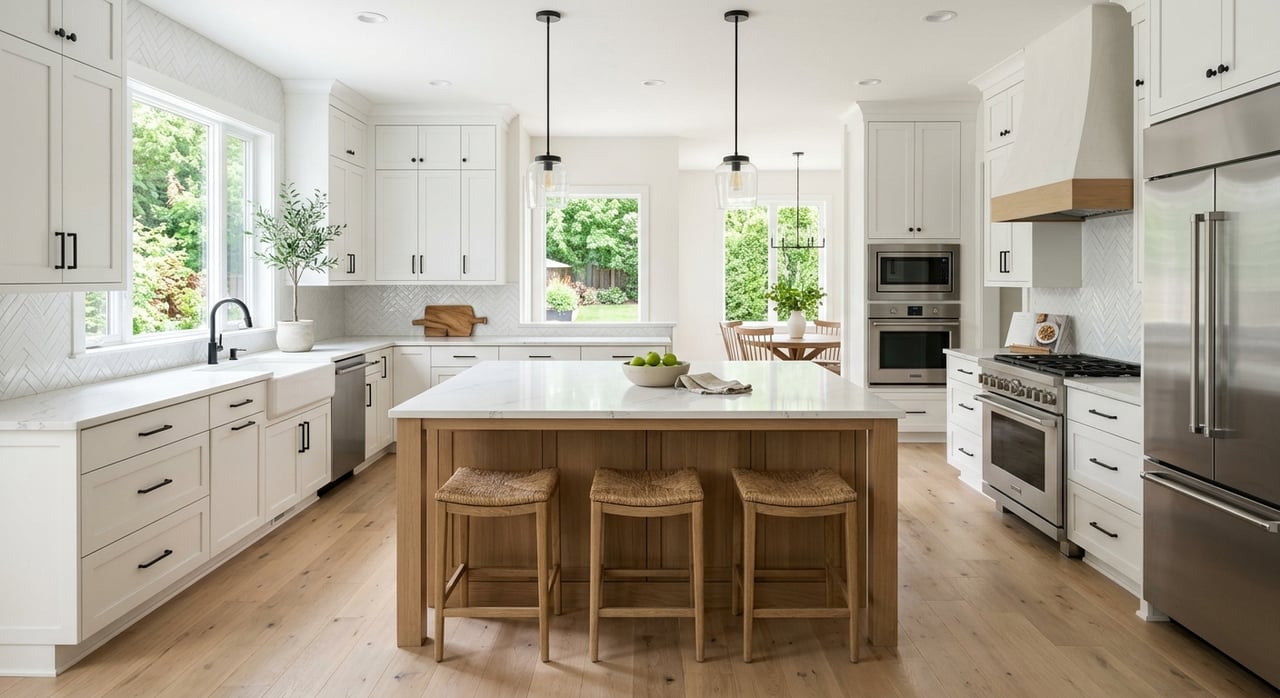
Eagan New Construction: A Buyer’s Practical Guide
If you are shopping for a brand-new home in Eagan, one thing matters right away: new construction here does not always look like the big subdivision model many buyers expect. Eagan is a mature suburb with limited vacant land, so your options may lean more toward townhomes, redevelopment projects, and smaller infill opportunities. That can still be a great fit, but it changes how you should compare location, timing, costs, and contract terms. Let’s dive in.
Eagan is largely built out. According to the city’s comprehensive planning data, less than 5% of land remained vacant for development, and only 2% of residential land remained for future growth. In practical terms, that means most new construction activity is happening through infill and redevelopment instead of large new neighborhoods on open land.
For you as a buyer, that changes the search. Instead of expecting rows of brand-new single-family homes on large lots, you are more likely to see attached housing, mixed-use redevelopment, or communities still surrounded by nearby construction activity. That does not make new construction less appealing, but it does mean you should look closely at the full setting, not just the home itself.
Current city development information points to activity around the Yankee Doodle corridor and other redevelopment areas. Examples include Trails End Commons, an active townhome community, along with projects like Quarry Road Addition and CityVue Commons Phase II. These examples show that Eagan’s pipeline is active, but it is shaped by redevelopment patterns rather than expansion into untouched land.
If you have been picturing a classic outer-ring subdivision, Eagan may feel different. The city’s land supply and current project mix suggest that many new homes will be part of a denser or more redevelopment-focused setting. You may also move into a community before every phase around you is complete.
That is why it helps to ask practical questions early. Is the home in a fully finished section? Are nearby roads, landscaping, or shared spaces still under development? Is the surrounding project residential only, or part of a larger mixed-use plan?
These details can affect your day-to-day experience after closing. Noise, traffic patterns, parking, and construction timing may all be part of the picture for a while. A careful review now can help you avoid surprises later.
One of the biggest differences in new construction is timing. In the same community, you might find a move-in-ready home, a home already under construction, and a future-release homesite that is not ready to start yet. Trails End Commons is a good local example of how all three can exist at once.
That matters because your closing timeline may vary a lot depending on the specific home you choose. A move-in-ready property may be able to close relatively quickly, while a future-release home may take much longer. If your lease is ending, your current home is under contract, or you need to plan around a relocation, this detail becomes critical.
It is smart to treat builder timing as a range rather than a fixed promise. Even when a project is progressing well, a new home still depends on approvals, permits, inspections, labor, and materials. The more upfront you are about your timeline, the easier it is to match your search to the right type of inventory.
Eagan has a formal review process for certain development applications. The city says some items, including preliminary subdivision and rezoning-related approvals, take a minimum of seven weeks from submittal to final City Council approval or disapproval. That is only one part of the process, but it helps explain why development schedules can stretch.
After land-use approval, the city’s Building Inspections Division handles plan review, permit issuance, and inspections. Permits must be paid before work begins, and a project is not complete until the final inspection is approved by a city inspector. For buyers, that means a home is not truly at the finish line until the local inspection process is complete.
This is one reason new construction often requires more patience than resale. A builder may have a target completion date, but the final path to closing still depends on city steps and construction progress. If you need certainty, a completed or nearly completed home may be a safer choice than an early-phase build.
Builder incentives can look very attractive, especially when rates and closing costs are top of mind. In the Twin Cities, Lennar has recently promoted select move-in-ready homes with a $10,000 price reduction, $10,000 toward closing costs, and $10,000 toward a rate buydown. The same promotion also ties some benefits to using Lennar Mortgage within a limited purchase window.
That kind of offer can absolutely help, but the key is to look past the headline number. Some incentives only apply to select homesites, some expire quickly, and some require you to use the builder’s affiliated lender or other services. A price cut on one homesite also does not mean every home in the community is priced the same way.
The Minnesota Department of Commerce advises buyers to compare rates and fees from several mortgage companies. That makes sense in new construction, where an incentive package may or may not beat an outside loan estimate once you compare the full cost. The best deal is the one that works in total, not just the one with the biggest advertised credit.
A new-construction contract can be more detailed than many buyers expect. Before you commit, it helps to slow down and confirm exactly what you are buying, what could change, and what your out-of-pocket costs may look like.
Start with questions like these:
These questions are not about being difficult. They are about being clear. In a new-build purchase, clarity protects your budget, your timeline, and your expectations.
Minnesota gives buyers important statutory new-home warranty protections. The state provides one year of coverage for faulty workmanship and defective materials, two years for plumbing, electrical, heating, and cooling systems, and ten years for major construction defects. Coverage begins when you take possession of the home.
The Minnesota Attorney General also notes that homeowners generally must notify the contractor in writing within six months of discovering a problem before pursuing a lawsuit. That means documentation matters. If something goes wrong after closing, you should follow the builder’s written process and keep good records.
You should also verify the builder’s license before signing. Minnesota Department of Labor and Industry guidance says licensed residential contractors must meet exam and insurance requirements, complete continuing education, and can be checked for disciplinary history online. This step is simple, but it can help you feel more confident about who you are hiring.
Some buyers assume they do not need representation if they are buying directly from a builder. In reality, it is important to understand who represents whom. Minnesota requires agency disclosure at first substantive contact, and if you want an agent to represent you as a buyer, a written buyer representation contract must be used.
The Minnesota Department of Commerce distinguishes between seller’s brokers, subagents, buyer’s brokers, dual agency, and facilitators. In a new-construction setting, that matters because the builder’s sales team is there to sell the builder’s homes. You should be clear on whether you are working with your own buyer representation, a dual-agency arrangement, or a different relationship entirely.
The Minnesota Attorney General also says buyers may refuse dual agency, though doing so can limit access to homes listed by that agent’s company. The point is not that one arrangement always fits every buyer. The point is that you should know what you are agreeing to before you move forward.
For many buyers, the real decision is not just which new home to buy. It is whether new construction or resale fits better in Eagan. Because the city has limited land left for growth, new homes are often part of redevelopment corridors rather than established large-lot settings.
New construction may offer modern layouts, newer finishes, and fewer immediate repair concerns. It also comes with Minnesota’s statutory warranty protections. On the other hand, a resale home may offer a more established lot, mature surroundings, or a location that is harder to duplicate in today’s development pipeline.
The right answer depends on what matters most to you. If low-maintenance living, newer design, and a fresh start rank highest, new construction may be worth the wait and the extra detail. If you care more about a settled setting or faster certainty, resale may be the better path.
If you want to buy new construction in Eagan, the smartest approach is to compare the whole package. That means looking at location, timeline, home type, surrounding development, HOA costs, financing terms, incentives, and warranty protections together. A good decision usually comes from the full picture, not just one appealing feature.
This is especially true in a market like Eagan, where new construction is limited and shaped by redevelopment. Inventory can be appealing, but each opportunity may come with tradeoffs around timing, density, or future nearby activity. The more organized your questions are, the more confident your decision will feel.
If you want help comparing Eagan new construction with resale options, understanding builder terms, or building a realistic timeline around your move, Blake Halverson Real Estate can help you navigate the process with clear, practical guidance.

Whether you are buying, selling or investing in real estate, Blake has a proven track record to be the versatile agent you need. Through strong, aggressive representation, Blake will help you achieve your desired outcomes.

7700 FRANCE AVE S STE 230 EDINA MN 55435