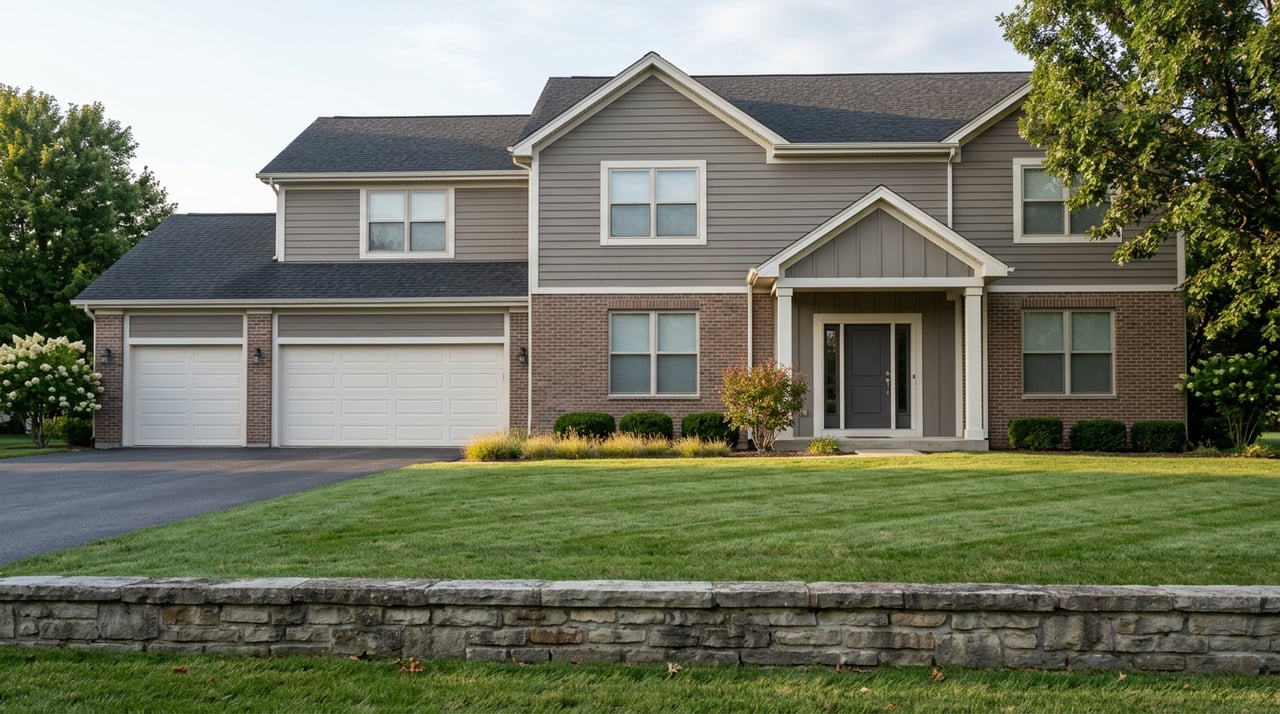
The Request That Didn't Make Orono's Hackberry Park Plan
Drive down Hackberry Hill Road this month and the changes are hard to miss. Fencing where there used to be open field. Equipment staged near the parking lot. The two T-ball diamonds that have anchored this corner of Orono for years look different than they did last summer, and if you've wondered what's actually happening at Hackberry Park, you're not alone. The city's own homepage has been telling residents as much for weeks: things look a little different here now.
What's underway is a $1.1 million redesign of the park's fields, three years in the making. But the more interesting story isn't the construction. It's what happened to the input that was supposed to shape it, and how a park that's barely large enough for what's already there ended up with a plan for a lot more.
Hackberry Park's overhaul didn't happen overnight. The city's capital improvement plan lays out three distinct phases, and the jump between them tells you something about how a modest neighborhood field became a major line item.
| Phase | Year | Budget |
|---|---|---|
| Plan | 2023 | $10,000 |
| Design | 2024 | $50,000 |
| Construction | 2025-2026 | $1,100,000 |
That construction figure covers a multi-use field, a renovated tee-ball setup, a playground, a basketball court, a bathroom, and 35 parking spaces, all packed onto a park that sits at 170 Hackberry Hill. The concept layout is still just that, a concept. The city's own project page notes the plan hasn't received final council sign-off, even as the budget has already moved into its construction window.
Here's the detail that matters if you live nearby. Hackberry Park is 3.58 acres. The National Recreation and Park Association's rule of thumb, echoed in Little League field guidelines, calls for 1.75 to 2 acres per T-ball field once you account for shared infrastructure like parking and pathways. Two T-ball fields alone need something like 3.5 to 4 acres to work comfortably. Hackberry is already running at the edge of what its footprint supports, and that's before adding a playground, a basketball court, a bathroom, and more than three dozen parking spaces on top of it.
This is the tension residents pointed to when the neighborhood advocacy group Friends of Orono began raising questions about the process last year. Their critique wasn't really about the fields themselves. It was about the survey the city used to justify redesigning them.
Orono's 2020 census count puts the city's population at 8,315, making it the largest municipality by area on Lake Minnetonka and a largely residential community. The Hackberry Park feedback survey that shaped the concept plan drew somewhere between 51 and 53 responses, depending on which city figure you look at. Do the math and that's roughly six-tenths of one percent of Orono's population deciding the direction of a public park redesign.
Friends of Orono raised several specific process concerns after the numbers came out. The survey ran online only, over a two-week window, which limits who sees it and who bothers to respond. And when city staff presented the results, they did it on National Night Out, a night when most residents are out at neighborhood block parties rather than sitting in a city hall chamber. The Park Commission still hadn't finalized a single concept plan as of the August 25, 2025 council meeting, and scheduled a special session for September 9, 2025 to keep discussing it.
The detail that stings most for the T-ball families who use the park: across all three of the city's listening sessions, the single most requested outcome was leaving the two T-ball fields exactly where they are. That request doesn't appear on the city's published summary of what residents want.
Hackberry isn't the only project on Orono's parks docket, and the contrast is worth knowing if you're trying to understand how the city prioritizes recreation dollars. Further down Willow Drive, adjacent to 340 Willow Drive N at what the city calls the Donation Garden Site, plans call for new pickleball courts and parking. That project's total cost is $535,000, but only $35,000 of it comes from the city's parks fund. The remaining $500,000 is expected to come from donations, and the project is explicitly contingent on that outside money materializing.
So two projects, blocks apart, on two very different footings. Hackberry's $1.1 million is fully budgeted city money moving forward on its own timeline. The pickleball courts need half a million dollars in donations to break ground at all. If you've been asked to chip in for the pickleball fund and wondered why Hackberry didn't need the same ask, that's the answer.
None of this is happening in isolation from the rest of the season. Hackberry sits close enough to Long Lake's civic life that it doubles as a staging ground for one of the area's oldest traditions. Long Lake's Corn Days Parade lines up on Willow Drive right next to the park, the same stretch of road the pickleball project sits along. This year's preliminary schedule had the parade penciled in for one of two August weekends, a reminder that even a decades-old local tradition still gets nailed down close to the date.
Meanwhile Orono Pesonen Stadium, just up the road, spent the back half of August running fall sports captain's practices and two-a-day football sessions, wrapping with a watermelon feed for players after the second practice on August 21. Between the parade route, the youth sports calendar, and now a construction zone in the middle of it, Hackberry has quietly been the busiest few acres in this part of Orono this season, whether or not the final field layout gets approved anytime soon.
As of now, the concept plan is still just that. The city has said publicly it won't have a final design until the council approves one, even though construction dollars are already flowing under the 2025-2026 budget line. If you live near Hackberry Hill Road and want to weigh in before that happens, the city's Hackberry Park project page is where updates, meeting notices, and the current concept layouts get posted.
A few things worth watching this fall:
Orono has a habit of studying its own public spaces for years before anything changes. This time, something is visibly changing already. Whether it changes into what most residents actually asked for is still an open question, and it's one worth following if this corner of town is part of your daily route.
If you're weighing a move to this part of Lake Minnetonka country, or you already call it home and want a clearer read on what's shifting in Orono beyond the headlines, Blake Halverson has spent years tracking these details block by block. Reach out anytime, or browse the full Orono neighborhood guide for more on what makes this community what it is.
Whether you are buying, selling or investing in real estate, Blake has a proven track record to be the versatile agent you need. Through strong, aggressive representation, Blake will help you achieve your desired outcomes.
7700 FRANCE AVE S STE 230 EDINA MN 55435